Rebellion, Murder, and Voting Rights in Rhode Island
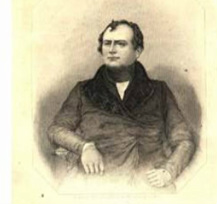
Thomas Wilson Dorr
by Kathy Warnes
The issues that sparked the Dorr Rebellion in Nineteenth Century Rhode Island still resonate in the Twenty First Century, including immigration, class warfare, voting rights, and a cold case murder mystery with the question: If John Gordon didn’t kill Amasa Sprague, who did and why?
In 1841, voting restrictions in Rhode Island dating to its 1663 Royal Charter upset Thomas W. Dorr, a Harvard educated Irish attorney. He decided to lead a rebellion which more than a century later led to a pardon of John Gordon for the murder of Amasa Sprague.
The Problems with the Royal Charter
The Rhode Island Royal Charter restricted voting rights to landowners and their eldest sons, and did not include a bill of rights or provisions for amending it.
Rhode Island’s Royal Charter stipulated that in order to vote, a free white man had to possess a moderate landed estate and voting privileges excluded Native Americans, black people, and women. Rhode Island continued to grow and develop industrially after the American Revolution and by 1840 about 60 percent of Rhode Island’s adult male population was ineligible to vote partially because of the movement of people from rural districts where they could own land to cities where they generally didn’t own land. Statistics revealed that less than 1,800 voters decided the future of 108,000 Rhode Island residents. The state legislature and property owners who opposed extending suffrage may have been afraid to expand the vote because at this point in its history Rhode Island had a large urban, industrial, and foreign-born working class.
Of all the original thirteen colonies, Rhode Island had the most to lose when Great Britain decided to increase its control over its colonies after 1763. On May 4, 1776, Rhode Island formally renounced all allegiance to King George III. After America won its Revolution and began to address self government issues, in 1778 Rhode Island quickly ratified the Articles of the Confederation. The Constitution of the United States posed a different question for Rhode Island which resisted its centralizing tendencies. Rhode Island didn’t ratify the Constitution of the United States until May 29, 1790, the last of the original thirteen states to do so.
Reflecting the national picture in Nineteenth Century America, the state wide trends in Rhode Island included industrialization, immigration, and urbanization. In 1790, Providence merchant Moses Brown and Samuel Slater, an English immigrant with cotton mill experience and knowledge, built and operated a cotton spinning mill at Pawtucket Falls., the first mill to spin cotton yarn by water power in America. Providence businessmen provided the funds and expertise needed to develop the cotton spinning industry in Rhode Island and by the late 1820s cotton processing had replaced commerce as the foundation of the Rhode Island’s economy. Woolen production, and a base and precious metals industry developed and expanded until they dominated Rhode Island’s economy. As industrialization grew, agriculture declined with many farms returning to forest as people migrated to the cities in search of a better life.
Although Irish immigrants began to trickle into New England in the 1830s, the trickle accelerated to a torrent after the Great Potato Famine of 1841. The earliest Irish immigrants to Rhode Island had enough money to start stores and taverns, but immigrants after the Great Potato Famine tended to arrive in Rhode Island destitute. Most of the Irish immigrants also arrived in Rhode Island devoutly Catholic, a fact that rankled its traditionally Protestant natives. Irish immigration impacted Rhode Island’s economy and intensified the prejudice of individual Rhode Islanders enough for them to use Irish immigrants as scapegoats. Prejudice strengthened the resolve of elite property owners to defend the right to vote as one of their exclusive rights.
America’s Uneven Voting Rights Record
Prosperous Rhode Islanders weren’t the only people who believed in restricting voting rights. John Adams, one of the signers of the Declaration of Independence, and the second president of the United States, wrote in 1776 that he felt that no good could come from allowing more Americans to vote. He said in part, that if the qualifications to vote were expanded …”new claims will arise, women will demand the vote; lads from 12 to 21 will think their rights not enough attended to; and every man who has not a farthing will demand an equal voice with any other, in all acts of state. It tends to confound and destroy all distinctions and prostrate all ranks to one common level.”
At different times in American history white Protestant voters denied the right to vote to Jews and Catholics and immigrants. Property requirements were widespread, reflecting the belief that property owners who paid taxes had a legitimate interest in their community’s success and well being and deserved a voice in public affairs.
According to Alexander Keyssar in The Right to Vote: The Contested History of Democracy in the United States, the word democracy sparked images of mob rule and people unqualified to participate in government. For decades many Americans were excluded from voting, including Blacks, Native Americans, women, men who had not received their inheritances and white males who didn’t own land.
The Revolutionary War produced a more egalitarian attitude toward voting which expanded with the adoption of the Constitution of the United States in 1789. It took another two hundred years or so for rights to vote for women and African Americans to become part of the voting ideal. Given Rhode Island’s unique Royal Charter and restrictive voting rights general assembly, Thomas Dorr faced daunting obstacles in leading his rebellion.
Thomas Wilson Dorr
Thomas Wilson Dorr’s grandfather emigrated from Ireland in time to join the American Revolution and join Paul Revere on his famous warning ride. The son of Sullivan and Lydia Dorr, Thomas was born November 5, 1805, in Providence, Rhode Island. Sullivan Dorr along with his father in law Crawford Allen, owned the Bernon Mill Village in Woonsocket, one of the six mill villages along the Blackstone River.
Thomas Dorr attended Phillips Exeter Academy and went on to Harvard. He wasn’t a rebel in college. In fact, when a serious student rebellion broke out in the 1820s, he didn’t take any part in it which made him one of the few students in his class to receive a diploma. Thomas Dorr graduated from Harvard College in 1823.
After he graduated from Harvard, Thomas Dorr went to New York City to study law and he was admitted to the bar in 1827. He returned to Providence to practice law and in 1834, he began his political career as a representative in the Rhode Island General Assembly.
Thomas Wilson Dorr Leads a Rebellion
By 1840, about 60 percent of Rhode Island’s male population was ineligible to vote. The Rhode Island State Legislature refused to reform the archaic voting laws and the Royal Charter didn’t provide the power to call a constitutional convention. Thomas Dorr and other determined people acted to solve this problem by forming the Rhode Island Suffrage Association. Representative Thomas Door and his followers led a movement to change the state constitution, expand the vote, and bring more democracy to state government. They called their movement the”People’s Party.”
Thomas Dorr supported granting voting rights to blacks, but white immigrants pressured him and some historians argue that he changed his position. In the spring of 1841, thousands of Dorr’s supporters paraded in Providence waving banners and carrying signs calling for electoral reform. They organized a “People’s Convention” and wrote a constitution that featured no property qualifications for white men to vote. Angry black men promptly joined the militia on the “Law and Order” or conservative side of the argument because Thomas Dorr had reneged on his promise.
In early 1842, the People’s Party garnered votes on their constitution and 14,000 people voted for it, including about 5,000 people with property- a clear majority even of the people voting under the rules of the old charter. In April, the People’s Party held an unofficial election and 6,000 people voted for Thomas Dorr for governor. On May 3, 1842, Thomas Wilson Dorr and The People’s Party held an inauguration and a parade of artisans, shopkeepers, mechanics and militia marched through Providence.
Conservative elites on all sides united against the People’s Party. The incumbent Rhode Island state government refused to acknowledge that the People’s party, the voting, or the adopting of the Constitution were legal, but the state government was alarmed enough to call a constitutional convention of its own, write a constitution, and submit it to the people.
By May 1842, Rhode Island had two governments, both with elections behind them and both claiming the support of the people. Both governors issued proclamations and Governor Samuel Ward King, of the “Law and Order” party appealed to the federal government for aid. On May 4, 1842, the state legislature requested federal troops to suppress the “lawless assemblages.”
Thomas Dorr traveled to Washington to plead his case before President John Tyler, but he received no support from the President and returned to Rhode Island. President John Tyler sent an observer to Providence, but he decided not to send soldiers, because “the danger of domestic violence is hourly diminishing”. President Tyler added that the United States Constitution said that it was his duty to send troops if the civil peace was disturbed and local authorities could not restore peace.
The Dorrites Attack the Providence Arsenal and Fight the “Law and Order” Charterites
Most of the new voters under the People’s Constitution were Irishmen who supported Thomas Dorr. On May 19, 1842, the Dorrites led an attack against the arsenal in Providence. Defenders of the arsenal or the Charterite or men who supported the original charter included Sullivan Dorr, Thomas’ father and his uncle Crawford Allen. Many of the other defenders of Providence were black men who had supported Thomas Dorr before he dropped them – purposely or not – from his call for suffrage. After the defeat at Providence, Thomas Dorr and his supporters retreated to Chepachet where they hoped to reconvene the People’s Convention. Many of Dorr’s followers deserted him and he fled Rhode Island on May 18, 1842.
Dorr returned briefly in June 1842 with a small band of New York volunteers, but hid in New Hampshire and Massachusetts when Governor King called out the state militia.
Finally convinced of the power of The People’s Party, the Charterites called another convention and in September 1842, the Rhode Island General Assembly met at Newport, Rhode Island. The General Assembly created a new state constitution which the old electorate ratified. Governor King endorsed the new constitution on January 23, 1843, and it became legal in May. The new constitution extended suffrage to any free man, regardless of race, who owned property or could pay a $1 poll tax and allowed naturalized citizens a vote only if they owned $134 in real estate.
In the early 1843 elections, the former Dorrites opposed the Law and Order group which they said used state militia to intimidate voters, and employers to intimidate employees and landlords to intimidate tenants. The Law and Order group lost the industrial towns, but won the vote of the agrarian areas and captured all major offices. Although the constitutional issues were settled, the divide between classes remained a chasm and the murder of a wealthy factory owner on New Year’s Eve 1843, only widened the chasm.
The Murder of Amasa Sprague
On December 31, 1843, wealthy factory owner Amasa Sprague set out to walk from his mansion to his family farm after enjoying a hearty Sunday dinner with his wife and four children. Amasa had built his prosperous textile and dye factory in Cranston, Rhode Island as part of family calico dying business that his grandfather and father had built and expanded into the largest calico dying factory in America. Amasa took over the factory while his brother William served as a Congressman, a one term governor of Rhode Island, and in 1843, as a United States senator.
At a point along the cold and dark road a shot rang out of the woods and hit Amasa in the right forearm, shattering it. Then someone ran up beside Amasa and hit him on the left side of his head with enough force to fracture his skull and rupture his brain membrane. Another blow on the right side of his head produced the same results. Judging from the blood scattered around the scene, Amasa had fought back ferociously and more than one person had attacked him.
Immediately, Amasa’s family, friends, and Rhode Island authorities suspected the Gordons, Irish immigrants who owned a tavern near the Sprague factory. Amasa Sprague had hired many Irish immigrants and installed them in tenements near the factory. He monitored them intently, to protect his investment in them and when Nicholas Gordon’s tavern and general store near his mill appeared to threaten his control, he surveyed Nicholas and his brothers, John and William. Soon Amasa Sprague decided to close the Gordon’s tavern because he felt that too many of his workers reported to the mill drunk. Amasa appealed to his brother Senator William Sprague and soon the authorities closed the Gordon’s tavern and general store.
The authorities arrested John Gordon the day after Amasa Sprague’s body was discovered. Prosecutors charged John Gordon and his brothers with conspiring to kill Amasa Sprague in revenge for closing their tavern. The nine day trial included 100 witnesses and the judge instructed the jurors – none of them Irish – to take “Yankee” witnesses more seriously than Irish witnesses. The jury found John Gordon guilty and he was hanged on February 14, 1845.
The Dorr armed insurrection and its aftermath combined with the trial of the Gordon brothers for the murder of Amasa Sprague created a poisoned atmosphere for Irish and poorer people and gave the elites ammunition against them. The elites felt that they needed to solve the Sprague murder case and imprison Thomas Dorr which in their minds would reaffirm their position as social, economic, and political leaders.
The Fate of Thomas Wilson Dorr and the Pardoning of John Gordon
Thomas Wilson Dorr returned to Providence in October 1843, perhaps thinking that the more liberal constitution that he had done so much to implement would safeguard his own liberty. Governor Samuel Ward King and his conservative allies had different ideas. They tried Thomas Dorr for treason against Rhode Island before the Rhode Island Supreme Court in the conservative stronghold of Newport. The judge instructed the jury to ignore all political arguments and consider whether Dorr had committed rebellious acts against the government. The jury found him guilty and the judge sentenced him to solitary confinement at hard labor for life. He went to prison in Newport on June 27, 1844, and spent twenty months in jail.
Thomas Dorr’s parents and his friends managed to keep public opinion stirred up in his favor and in January 1845, the state legislature and Law and Order Governor James Fenner issued an Act of General Amnesty and Thomas Dorr was released. In 1851, Thomas regained his civil rights, and in January 1854, the Rhode Island Legislature passed an act annulling the Rhode Island Supreme Court verdict.
The Rhode Island Supreme Court itself wrote that “The union of all the powers of government in the same hands is but the definition of despotism.” The same Supreme Court that had convinced Thomas Dorr of treason against the charter in 1844 ruled ten years later that the charter had authorized a despotic, un-American form of government!
Despite these victories Thomas Dorr retired, plagued by broken health, and he died on December 27, 1854.
Thomas Wilson Dorr’s death didn’t end the controversy between the conservative Law and Order Charterities and the Dorr movement and the People’s Party. The Dorr movement’s Martin Luther brought a suit against Law and Order militiamen all of the way to the United States Supreme Court, charging that the People’s Government was Rhode Island’s legitimate government in 1842. Daniel Webster argued against the Dorrites, contending that if people could claim a constitutional right to overthrow an existing government, there would be no more law and no more government, but rather anarchy.
In the case, titled Luther v. Borden, 1849, The United States Supreme Court set a long lasting precedent by ruling that it wouldn’t interfere in certain “political” questions that should be left to the executive and legislative branches of the government. The naturally conservative court said that critical issues like war and revolution should be left to the President and Congress to act upon.
On June 29, 2011, 166 years after his execution, Rhode Island Governor Lincoln Chafee pardoned John Gordon. Governor Chafee signed the gubernatorial proclamation granting the pardon in a ceremony at the Old State House in Providence where John Gordon’s trial took place in 1844.
“John Gordon was put to death after a highly questionable judicial process and based on no concrete evidence,” Governor Chafee said. “There is no question he was not given a fair trial. Today we are trying to right that injustice. John Gordon’s wrongful execution was a major factor in Rhode Island’s abolition of and longstanding opposition to the death penalty.”
John Gordon is the last person that the state of Rhode Island executed and Thomas Wilson Dorr is included in Rhode Island’s list of governors.
References
History You Can See – Scenes of Change In Rhode Island 1790-1910 written by Hadassah Davis and Natalie Robinson and published by the League of Rhode Island Historical Societies, Providence, 1986.
A History of Rhode Island Working People, edited by Paul Buhle, Scott Molloy, and Gail Sansbury and published by Regine Printing Co., Providence, 1983.
Charles and Tess Hoffmann, Brotherly Love: Murder and the Politics of Prejudice in Nineteenth-century Rhode Island (Amherst, Mass.: The University of Massachusetts Press, 1993).
Keyss, Alexander. The Right to Vote: The Contested History of Democracy in the United States. Basic Books, 2001.
The issues that sparked the Dorr Rebellion in Nineteenth Century Rhode Island still resonate in the Twenty First Century, including immigration, class warfare, voting rights, and a cold case murder mystery with the question: If John Gordon didn’t kill Amasa Sprague, who did and why?
In 1841, voting restrictions in Rhode Island dating to its 1663 Royal Charter upset Thomas W. Dorr, a Harvard educated Irish attorney. He decided to lead a rebellion which more than a century later led to a pardon of John Gordon for the murder of Amasa Sprague.
The Problems with the Royal Charter
The Rhode Island Royal Charter restricted voting rights to landowners and their eldest sons, and did not include a bill of rights or provisions for amending it.
Rhode Island’s Royal Charter stipulated that in order to vote, a free white man had to possess a moderate landed estate and voting privileges excluded Native Americans, black people, and women. Rhode Island continued to grow and develop industrially after the American Revolution and by 1840 about 60 percent of Rhode Island’s adult male population was ineligible to vote partially because of the movement of people from rural districts where they could own land to cities where they generally didn’t own land. Statistics revealed that less than 1,800 voters decided the future of 108,000 Rhode Island residents. The state legislature and property owners who opposed extending suffrage may have been afraid to expand the vote because at this point in its history Rhode Island had a large urban, industrial, and foreign-born working class.
Of all the original thirteen colonies, Rhode Island had the most to lose when Great Britain decided to increase its control over its colonies after 1763. On May 4, 1776, Rhode Island formally renounced all allegiance to King George III. After America won its Revolution and began to address self government issues, in 1778 Rhode Island quickly ratified the Articles of the Confederation. The Constitution of the United States posed a different question for Rhode Island which resisted its centralizing tendencies. Rhode Island didn’t ratify the Constitution of the United States until May 29, 1790, the last of the original thirteen states to do so.
Reflecting the national picture in Nineteenth Century America, the state wide trends in Rhode Island included industrialization, immigration, and urbanization. In 1790, Providence merchant Moses Brown and Samuel Slater, an English immigrant with cotton mill experience and knowledge, built and operated a cotton spinning mill at Pawtucket Falls., the first mill to spin cotton yarn by water power in America. Providence businessmen provided the funds and expertise needed to develop the cotton spinning industry in Rhode Island and by the late 1820s cotton processing had replaced commerce as the foundation of the Rhode Island’s economy. Woolen production, and a base and precious metals industry developed and expanded until they dominated Rhode Island’s economy. As industrialization grew, agriculture declined with many farms returning to forest as people migrated to the cities in search of a better life.
Although Irish immigrants began to trickle into New England in the 1830s, the trickle accelerated to a torrent after the Great Potato Famine of 1841. The earliest Irish immigrants to Rhode Island had enough money to start stores and taverns, but immigrants after the Great Potato Famine tended to arrive in Rhode Island destitute. Most of the Irish immigrants also arrived in Rhode Island devoutly Catholic, a fact that rankled its traditionally Protestant natives. Irish immigration impacted Rhode Island’s economy and intensified the prejudice of individual Rhode Islanders enough for them to use Irish immigrants as scapegoats. Prejudice strengthened the resolve of elite property owners to defend the right to vote as one of their exclusive rights.
America’s Uneven Voting Rights Record
Prosperous Rhode Islanders weren’t the only people who believed in restricting voting rights. John Adams, one of the signers of the Declaration of Independence, and the second president of the United States, wrote in 1776 that he felt that no good could come from allowing more Americans to vote. He said in part, that if the qualifications to vote were expanded …”new claims will arise, women will demand the vote; lads from 12 to 21 will think their rights not enough attended to; and every man who has not a farthing will demand an equal voice with any other, in all acts of state. It tends to confound and destroy all distinctions and prostrate all ranks to one common level.”
At different times in American history white Protestant voters denied the right to vote to Jews and Catholics and immigrants. Property requirements were widespread, reflecting the belief that property owners who paid taxes had a legitimate interest in their community’s success and well being and deserved a voice in public affairs.
According to Alexander Keyssar in The Right to Vote: The Contested History of Democracy in the United States, the word democracy sparked images of mob rule and people unqualified to participate in government. For decades many Americans were excluded from voting, including Blacks, Native Americans, women, men who had not received their inheritances and white males who didn’t own land.
The Revolutionary War produced a more egalitarian attitude toward voting which expanded with the adoption of the Constitution of the United States in 1789. It took another two hundred years or so for rights to vote for women and African Americans to become part of the voting ideal. Given Rhode Island’s unique Royal Charter and restrictive voting rights general assembly, Thomas Dorr faced daunting obstacles in leading his rebellion.
Thomas Wilson Dorr
Thomas Wilson Dorr’s grandfather emigrated from Ireland in time to join the American Revolution and join Paul Revere on his famous warning ride. The son of Sullivan and Lydia Dorr, Thomas was born November 5, 1805, in Providence, Rhode Island. Sullivan Dorr along with his father in law Crawford Allen, owned the Bernon Mill Village in Woonsocket, one of the six mill villages along the Blackstone River.
Thomas Dorr attended Phillips Exeter Academy and went on to Harvard. He wasn’t a rebel in college. In fact, when a serious student rebellion broke out in the 1820s, he didn’t take any part in it which made him one of the few students in his class to receive a diploma. Thomas Dorr graduated from Harvard College in 1823.
After he graduated from Harvard, Thomas Dorr went to New York City to study law and he was admitted to the bar in 1827. He returned to Providence to practice law and in 1834, he began his political career as a representative in the Rhode Island General Assembly.
Thomas Wilson Dorr Leads a Rebellion
By 1840, about 60 percent of Rhode Island’s male population was ineligible to vote. The Rhode Island State Legislature refused to reform the archaic voting laws and the Royal Charter didn’t provide the power to call a constitutional convention. Thomas Dorr and other determined people acted to solve this problem by forming the Rhode Island Suffrage Association. Representative Thomas Door and his followers led a movement to change the state constitution, expand the vote, and bring more democracy to state government. They called their movement the”People’s Party.”
Thomas Dorr supported granting voting rights to blacks, but white immigrants pressured him and some historians argue that he changed his position. In the spring of 1841, thousands of Dorr’s supporters paraded in Providence waving banners and carrying signs calling for electoral reform. They organized a “People’s Convention” and wrote a constitution that featured no property qualifications for white men to vote. Angry black men promptly joined the militia on the “Law and Order” or conservative side of the argument because Thomas Dorr had reneged on his promise.
In early 1842, the People’s Party garnered votes on their constitution and 14,000 people voted for it, including about 5,000 people with property- a clear majority even of the people voting under the rules of the old charter. In April, the People’s Party held an unofficial election and 6,000 people voted for Thomas Dorr for governor. On May 3, 1842, Thomas Wilson Dorr and The People’s Party held an inauguration and a parade of artisans, shopkeepers, mechanics and militia marched through Providence.
Conservative elites on all sides united against the People’s Party. The incumbent Rhode Island state government refused to acknowledge that the People’s party, the voting, or the adopting of the Constitution were legal, but the state government was alarmed enough to call a constitutional convention of its own, write a constitution, and submit it to the people.
By May 1842, Rhode Island had two governments, both with elections behind them and both claiming the support of the people. Both governors issued proclamations and Governor Samuel Ward King, of the “Law and Order” party appealed to the federal government for aid. On May 4, 1842, the state legislature requested federal troops to suppress the “lawless assemblages.”
Thomas Dorr traveled to Washington to plead his case before President John Tyler, but he received no support from the President and returned to Rhode Island. President John Tyler sent an observer to Providence, but he decided not to send soldiers, because “the danger of domestic violence is hourly diminishing”. President Tyler added that the United States Constitution said that it was his duty to send troops if the civil peace was disturbed and local authorities could not restore peace.
The Dorrites Attack the Providence Arsenal and Fight the “Law and Order” Charterites
Most of the new voters under the People’s Constitution were Irishmen who supported Thomas Dorr. On May 19, 1842, the Dorrites led an attack against the arsenal in Providence. Defenders of the arsenal or the Charterite or men who supported the original charter included Sullivan Dorr, Thomas’ father and his uncle Crawford Allen. Many of the other defenders of Providence were black men who had supported Thomas Dorr before he dropped them – purposely or not – from his call for suffrage. After the defeat at Providence, Thomas Dorr and his supporters retreated to Chepachet where they hoped to reconvene the People’s Convention. Many of Dorr’s followers deserted him and he fled Rhode Island on May 18, 1842.
Dorr returned briefly in June 1842 with a small band of New York volunteers, but hid in New Hampshire and Massachusetts when Governor King called out the state militia.
Finally convinced of the power of The People’s Party, the Charterites called another convention and in September 1842, the Rhode Island General Assembly met at Newport, Rhode Island. The General Assembly created a new state constitution which the old electorate ratified. Governor King endorsed the new constitution on January 23, 1843, and it became legal in May. The new constitution extended suffrage to any free man, regardless of race, who owned property or could pay a $1 poll tax and allowed naturalized citizens a vote only if they owned $134 in real estate.
In the early 1843 elections, the former Dorrites opposed the Law and Order group which they said used state militia to intimidate voters, and employers to intimidate employees and landlords to intimidate tenants. The Law and Order group lost the industrial towns, but won the vote of the agrarian areas and captured all major offices. Although the constitutional issues were settled, the divide between classes remained a chasm and the murder of a wealthy factory owner on New Year’s Eve 1843, only widened the chasm.
The Murder of Amasa Sprague
On December 31, 1843, wealthy factory owner Amasa Sprague set out to walk from his mansion to his family farm after enjoying a hearty Sunday dinner with his wife and four children. Amasa had built his prosperous textile and dye factory in Cranston, Rhode Island as part of family calico dying business that his grandfather and father had built and expanded into the largest calico dying factory in America. Amasa took over the factory while his brother William served as a Congressman, a one term governor of Rhode Island, and in 1843, as a United States senator.
At a point along the cold and dark road a shot rang out of the woods and hit Amasa in the right forearm, shattering it. Then someone ran up beside Amasa and hit him on the left side of his head with enough force to fracture his skull and rupture his brain membrane. Another blow on the right side of his head produced the same results. Judging from the blood scattered around the scene, Amasa had fought back ferociously and more than one person had attacked him.
Immediately, Amasa’s family, friends, and Rhode Island authorities suspected the Gordons, Irish immigrants who owned a tavern near the Sprague factory. Amasa Sprague had hired many Irish immigrants and installed them in tenements near the factory. He monitored them intently, to protect his investment in them and when Nicholas Gordon’s tavern and general store near his mill appeared to threaten his control, he surveyed Nicholas and his brothers, John and William. Soon Amasa Sprague decided to close the Gordon’s tavern because he felt that too many of his workers reported to the mill drunk. Amasa appealed to his brother Senator William Sprague and soon the authorities closed the Gordon’s tavern and general store.
The authorities arrested John Gordon the day after Amasa Sprague’s body was discovered. Prosecutors charged John Gordon and his brothers with conspiring to kill Amasa Sprague in revenge for closing their tavern. The nine day trial included 100 witnesses and the judge instructed the jurors – none of them Irish – to take “Yankee” witnesses more seriously than Irish witnesses. The jury found John Gordon guilty and he was hanged on February 14, 1845.
The Dorr armed insurrection and its aftermath combined with the trial of the Gordon brothers for the murder of Amasa Sprague created a poisoned atmosphere for Irish and poorer people and gave the elites ammunition against them. The elites felt that they needed to solve the Sprague murder case and imprison Thomas Dorr which in their minds would reaffirm their position as social, economic, and political leaders.
The Fate of Thomas Wilson Dorr and the Pardoning of John Gordon
Thomas Wilson Dorr returned to Providence in October 1843, perhaps thinking that the more liberal constitution that he had done so much to implement would safeguard his own liberty. Governor Samuel Ward King and his conservative allies had different ideas. They tried Thomas Dorr for treason against Rhode Island before the Rhode Island Supreme Court in the conservative stronghold of Newport. The judge instructed the jury to ignore all political arguments and consider whether Dorr had committed rebellious acts against the government. The jury found him guilty and the judge sentenced him to solitary confinement at hard labor for life. He went to prison in Newport on June 27, 1844, and spent twenty months in jail.
Thomas Dorr’s parents and his friends managed to keep public opinion stirred up in his favor and in January 1845, the state legislature and Law and Order Governor James Fenner issued an Act of General Amnesty and Thomas Dorr was released. In 1851, Thomas regained his civil rights, and in January 1854, the Rhode Island Legislature passed an act annulling the Rhode Island Supreme Court verdict.
The Rhode Island Supreme Court itself wrote that “The union of all the powers of government in the same hands is but the definition of despotism.” The same Supreme Court that had convinced Thomas Dorr of treason against the charter in 1844 ruled ten years later that the charter had authorized a despotic, un-American form of government!
Despite these victories Thomas Dorr retired, plagued by broken health, and he died on December 27, 1854.
Thomas Wilson Dorr’s death didn’t end the controversy between the conservative Law and Order Charterities and the Dorr movement and the People’s Party. The Dorr movement’s Martin Luther brought a suit against Law and Order militiamen all of the way to the United States Supreme Court, charging that the People’s Government was Rhode Island’s legitimate government in 1842. Daniel Webster argued against the Dorrites, contending that if people could claim a constitutional right to overthrow an existing government, there would be no more law and no more government, but rather anarchy.
In the case, titled Luther v. Borden, 1849, The United States Supreme Court set a long lasting precedent by ruling that it wouldn’t interfere in certain “political” questions that should be left to the executive and legislative branches of the government. The naturally conservative court said that critical issues like war and revolution should be left to the President and Congress to act upon.
On June 29, 2011, 166 years after his execution, Rhode Island Governor Lincoln Chafee pardoned John Gordon. Governor Chafee signed the gubernatorial proclamation granting the pardon in a ceremony at the Old State House in Providence where John Gordon’s trial took place in 1844.
“John Gordon was put to death after a highly questionable judicial process and based on no concrete evidence,” Governor Chafee said. “There is no question he was not given a fair trial. Today we are trying to right that injustice. John Gordon’s wrongful execution was a major factor in Rhode Island’s abolition of and longstanding opposition to the death penalty.”
John Gordon is the last person that the state of Rhode Island executed and Thomas Wilson Dorr is included in Rhode Island’s list of governors.
References
History You Can See – Scenes of Change In Rhode Island 1790-1910 written by Hadassah Davis and Natalie Robinson and published by the League of Rhode Island Historical Societies, Providence, 1986.
A History of Rhode Island Working People, edited by Paul Buhle, Scott Molloy, and Gail Sansbury and published by Regine Printing Co., Providence, 1983.
Charles and Tess Hoffmann, Brotherly Love: Murder and the Politics of Prejudice in Nineteenth-century Rhode Island (Amherst, Mass.: The University of Massachusetts Press, 1993).
Keyss, Alexander. The Right to Vote: The Contested History of Democracy in the United States. Basic Books, 2001.
